Paint correction and waxing are often mentioned together, but they do different jobs. If your vehicle’s finish looks dull or has swirl marks, understanding the difference can help you choose the right detailing service.
What is paint correction?
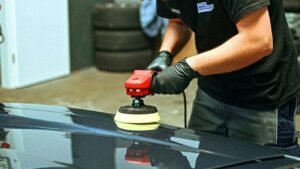
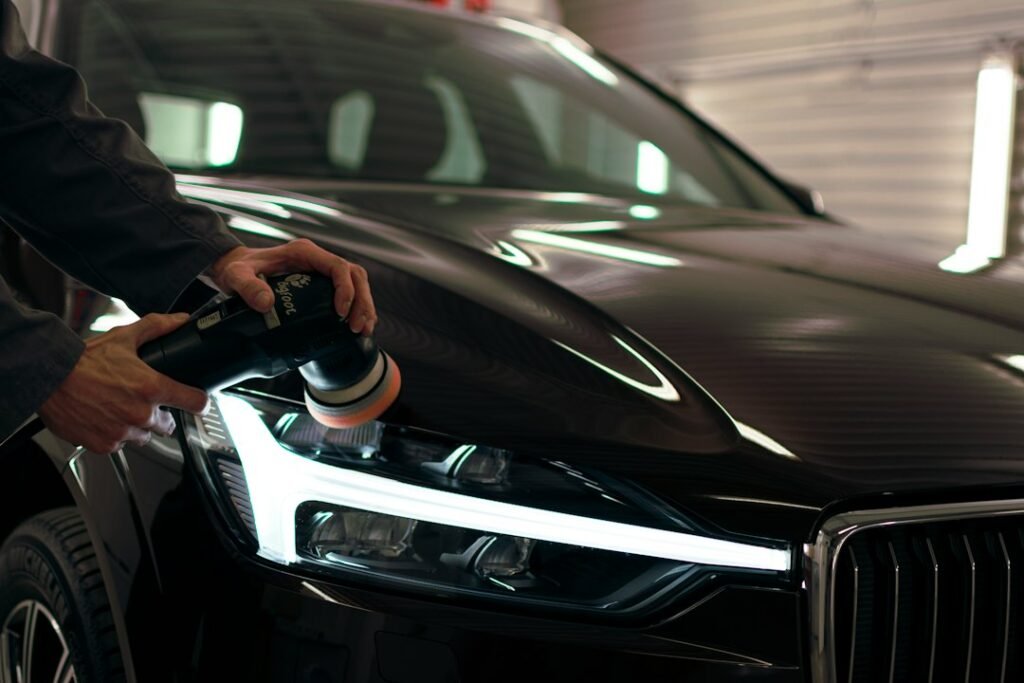
Paint correction is a process that uses machine polishing and appropriate compounds or polishes to reduce the appearance of certain defects in a vehicle’s clear coat. Depending on the paint and the severity of the marks, a detailer may use a one-step enhancement or a more involved multi-stage process.
Correction can improve the appearance of light swirls, fine scratches, oxidation, and haze. Not every scratch can safely be removed: defects that cut deeply into the paint may require touch-up or body-shop repair. A responsible detailer evaluates the finish before recommending how much correction is appropriate.
What does waxing do?
Wax is applied to the surface to add gloss and a temporary layer of protection. It can make paint look richer and help water bead, but it generally does not remove swirl marks or correct scratches. Some products may temporarily mask very fine defects, but that is not the same as correcting them.
Key differences
| Feature | Paint correction | Waxing |
|---|---|---|
| Main purpose | Improve visible paint defects | Add gloss and temporary protection |
| Changes defects? | Can reduce suitable defects through polishing | Does not correct paint defects |
| Preparation | Careful cleaning and paint assessment | Clean, dry paint |
| Protection | Correction itself is not a long-term protective coating | Provides a temporary protective layer |
Which should you choose?
If your paint is already in good condition and you mainly want extra gloss and a layer of protection, waxing may be enough. If you see swirls under direct light, hazy reflections, or light surface marks, a paint-correction consultation may make more sense.
Correction removes a very small amount of clear coat, so it should not be done unnecessarily or aggressively. The goal is to improve the finish safely, not chase every mark regardless of risk.
Can you correct paint and then protect it?
Yes. A common approach is to wash and decontaminate the paint, perform the appropriate level of correction, and then apply a suitable protection product. Depending on your goals, that may be wax, a sealant, or ceramic coating. The correct option depends on budget, maintenance habits, and expected durability.
How to prepare for a professional assessment
Tell your detailer how the vehicle is washed, whether it has previously been polished, and which marks concern you most. Ask what results are realistic and whether a test spot can help determine the right approach.
For local options, visit the paint correction service page or contact PNW Auto Salon in Olympia, Washington, to discuss your vehicle’s finish.
Frequently asked questions
Will paint correction remove every scratch?
No. Deep scratches may be too deep to correct safely by polishing.
Does waxing fix swirl marks?
Wax can add gloss but does not permanently remove swirl marks.
Is paint correction needed before ceramic coating?
Not in every case. The paint should be assessed so preparation matches its condition and your desired finish.